

Blog
How to Know When Your Roof Needs Cleaning in Portland, OR
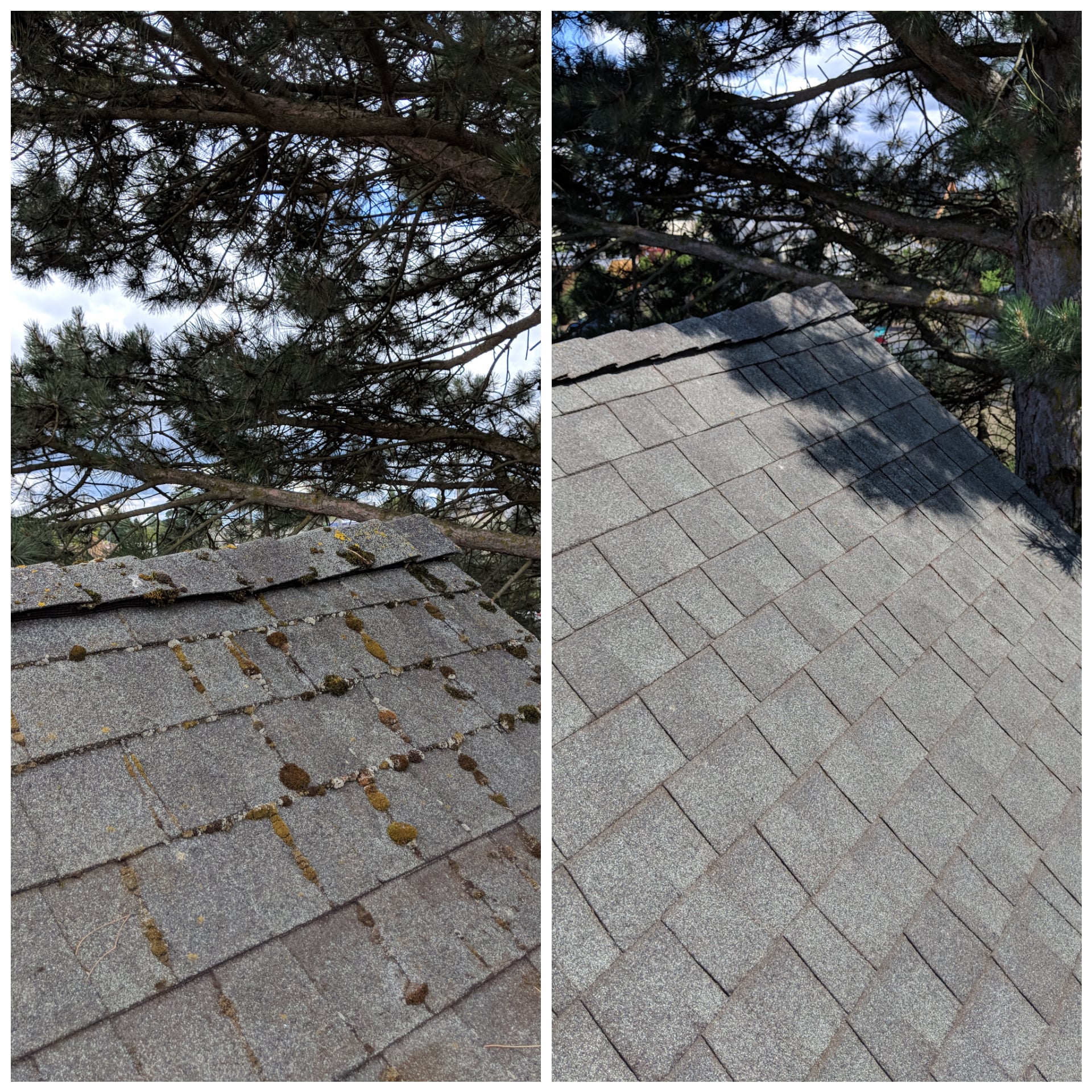
Portland’s wet climate is relentless on roofs. With over 150 rainy days a year and months of overcast skies that keep surfaces damp, moss, algae, and debris build up faster than most homeowners realize. The tricky part: the damage is usually well underway before it’s obvious from the ground.
Here’s how to know when your roof actually needs cleaning — and when you can wait.
The Quick Checklist
Your roof likely needs cleaning if any of these are true:
- You can see green or fuzzy patches on the roof surface
- There are dark streaks running down the slope
- It’s been more than 2 years since the last professional cleaning
- Your gutters have granules or plant debris in them
- You have heavy tree cover or a north-facing roof
- Shingles look uneven, lifted, or discolored
If you checked even one of these, keep reading.
6 Clear Signs Your Roof Needs Cleaning
1. Visible Moss or Green Patches
Green fuzzy patches — especially on north-facing slopes or under tree cover — are active moss colonies. By the time moss is visible from the ground, it’s been growing for months and its root-like structures (rhizoids) are already working between your shingles. Left untreated, moss lifts shingles, traps moisture, and accelerates rot in the wood decking below.
2. Dark Streaks Down the Roof
Black or dark gray streaking is a sign of Gloeocapsa magma — a type of algae that feeds on the limestone filler in asphalt shingles. It’s not cosmetic. Algae degrades shingles over time and spreads quickly in Portland’s wet conditions. Once you see streaks on one section, the spores are already seeding the rest of the roof.
3. Debris Buildup That Won’t Clear
Pine needles, leaves, and small branches are a constant in Portland’s tree-lined neighborhoods. A few scattered leaves blow off on their own. But a matted layer that stays wet through dry spells is actively trapping moisture and creating the damp conditions moss thrives in. If you see a visible debris layer after a week of dry weather, it’s time to clean.
4. Granules in Your Gutters
Asphalt shingles shed a small number of granules normally. But if you’re clearing gutters and finding a significant amount of gritty, sand-like material, your shingles are degrading. This often happens when moss or algae has been lifting and loosening the surface layer. Granule loss removes your roof’s UV protection and accelerates aging — this is a sign the damage is already underway.
5. It’s Been More Than 2 Years
In Portland’s climate, biological growth starts well before it’s visible. Most roofing professionals recommend cleaning every 1–3 years depending on your situation — annually for heavily shaded roofs, every 2–3 years for average exposure. If you can’t remember when your roof was last cleaned (or it never has been), schedule an inspection. Proactive cleaning is always cheaper than reactive repair.
6. Your Gutters Are Overflowing or Clogging Fast
Gutters that clog unusually fast or overflow during moderate rain are often being fed by a roof full of moss fragments, debris, and granules. When gutters fail, water backs up at the roofline — exactly where you don’t want standing moisture. This leads to fascia rot, soffit damage, and foundation issues over time.
When You Can Probably Wait
Not every roof needs immediate attention. You can likely wait if:
- Your roof was professionally cleaned within the last 12–18 months
- You have good sun exposure and minimal tree cover
- There are no visible signs of growth or discoloration
- Your gutters are running clean with no granules
Even then, a visual inspection each spring and fall — binoculars from the ground work fine — will catch anything starting to develop.
How to Check Your Roof Without Climbing It
You don’t need to get on the roof to assess it. Here’s a 5-minute ground inspection:
- Stand at each corner of your home and look up at all four slopes
- Use binoculars to check for green patches, dark streaks, or lifted shingles
- Look at the north-facing slope first — it always shows problems first
- Check the gutters after the next rain for granule buildup
- Look at the roofline for any areas where shingles appear uneven or raised
If you spot anything, don’t wait. A small moss colony that costs $500 to treat today can become a $5,000 shingle repair job by next spring.
FAQ
What’s the difference between moss and algae on a roof?
Moss is green, fuzzy, and three-dimensional — it physically lifts shingles. Algae appears as dark or black flat streaks and eats into shingle material. Both need treatment, but moss causes structural damage faster.
Can I clean my roof myself?
DIY scrubbing with a brush damages shingles and doesn’t kill the root system — growth returns faster. Professional soft washing uses biodegradable solutions at low pressure to kill growth at the root without damaging your roof.
How long does a professional cleaning take?
Most Portland homes take 2–4 hours depending on roof size and moss severity. The cleaning solution does most of the work — dead growth rinses away with subsequent rainfall over the following weeks.
Get a Free Roof Inspection in Portland
Not sure what you’re looking at? We’ll come out and tell you honestly whether your roof needs cleaning now, can wait, or has damage that needs attention first. Premium PowerWash serves Portland, Lake Oswego, Beaverton, Tigard, Tualatin, Oregon City, Wilsonville, and Sherwood.
Call (503) 575-6575 or request a free quote online.