
Blog
Soft Washing vs Pressure Washing: What’s Best for Portland Roofs?
Keeping your roof clean in Portland is a constant battle against moss, algae, and grime. When it’s time to clean, you face a critical choice: soft washing or pressure washing? The method you choose directly impacts your roof’s health, longevity, and warranty. Making the wrong call can lead to thousands in premature repairs.
Soft Washing vs. Pressure Washing: At a Glance
| Soft Washing | Pressure Washing | |
|---|---|---|
| Water pressure | Low (garden hose level) | High (1,500–4,000 PSI) |
| Kills moss/algae roots | Yes | No |
| Safe for asphalt shingles | Yes | No — strips granules |
| Safe for cedar shake | Yes | No — cracks and splits wood |
| Voids roof warranty | No | Often yes |
| Results last | 2–4 years | 6–12 months |
| Recommended by ARMA | Yes | No |
What Is Soft Washing?
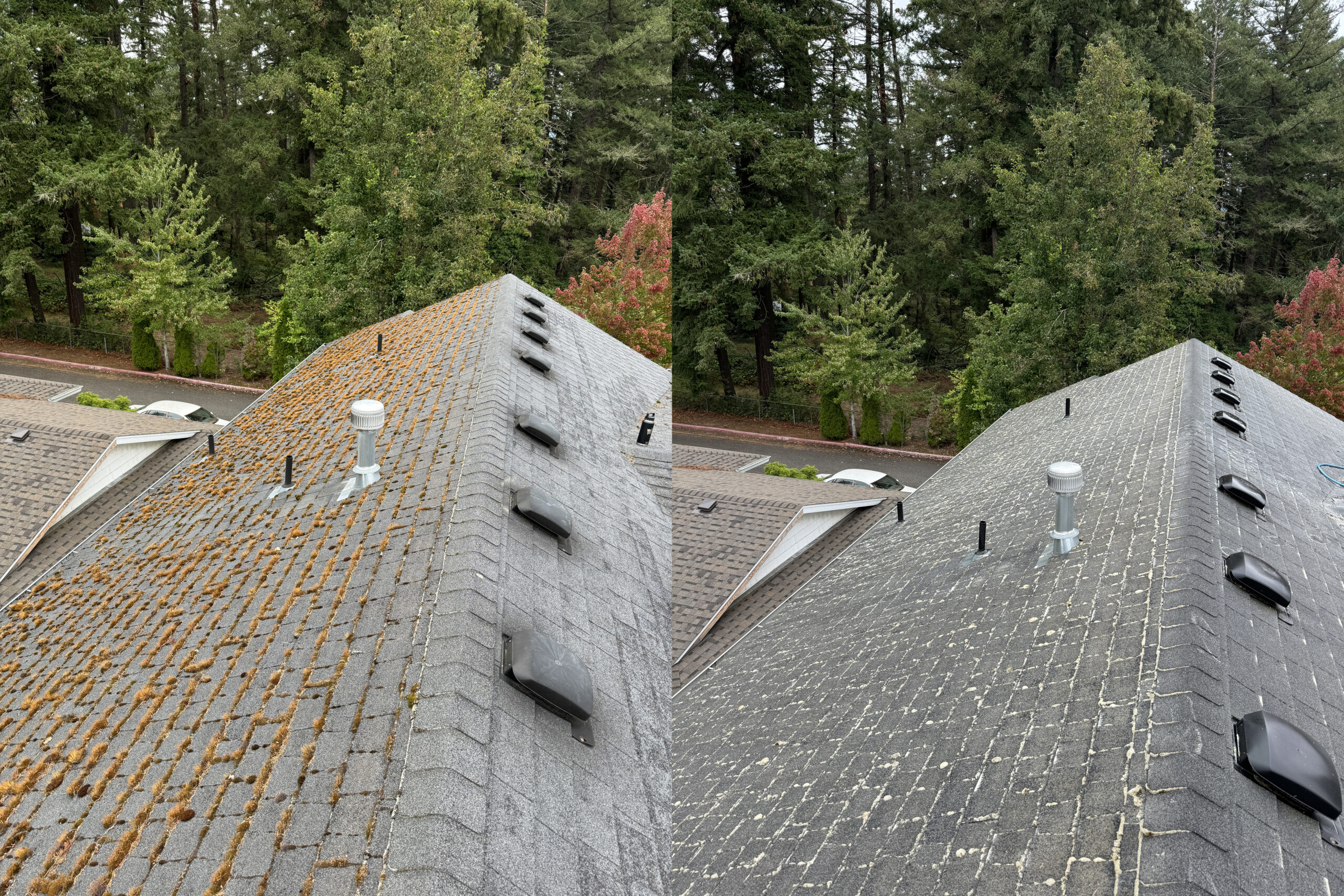
Soft washing uses low-pressure water — similar to a garden hose — combined with biodegradable cleaning solutions that penetrate and kill organic growth at the molecular level. Moss, algae, and lichen die at the root, then rinse away gently without damaging roofing surfaces.
Benefits for Portland Roofs
- Kills the root systems of moss and algae — not just the surface layer
- Prevents rapid regrowth in Portland’s wet climate
- Safe for every common roof type: asphalt shingles, cedar shake, tile, and metal
- Preserves granules on asphalt shingles (your UV protection)
- Meets Asphalt Roofing Manufacturers Association (ARMA) guidelines
- Results typically last 2–4 years
What Is Pressure Washing?
Pressure washing uses a motorized pump to accelerate water into a high-velocity stream that physically blasts away surface dirt and organic matter. It works well on concrete driveways and stone patios — hard, durable surfaces that can handle the force. Roofs cannot.
Why Pressure Washing Damages Roofs
- Strips granules from asphalt shingles, removing UV protection and accelerating aging
- Voids warranties — most manufacturers explicitly prohibit high-pressure washing
- Forces water under shingles, leading to rot, mold, and leaks in your attic
- Cracks tile and splits cedar shake under sustained pressure
- Doesn’t kill roots — moss and algae regrow within months because the root system survives
- Creates fall hazards as the powerful spray destabilizes footing on a sloped, wet surface
Which Method Is Best for Portland Roofs?
For Portland homeowners, soft washing is the clear choice — every time. Our extended wet season (October through May), heavy tree cover, and shaded lots create ideal conditions for moss and algae. A method that only removes the visible surface growth without killing the root system isn’t a solution; it’s a temporary cosmetic fix that leaves the problem intact.
Soft washing addresses the root cause, protects your roofing materials, preserves your warranty, and delivers results that last years rather than months.
FAQ: Soft Washing vs. Pressure Washing
Can pressure washing permanently damage my roof?
Yes. Stripped granules don’t grow back. Once the protective layer on asphalt shingles is damaged, UV degradation accelerates and your roof’s remaining lifespan shortens significantly. This damage also commonly voids manufacturer warranties.
Is soft washing safe for all roof types?
Yes. Soft washing is safe and effective on asphalt shingles, cedar shake, architectural shingles, clay and concrete tile, and metal roofs. The low pressure protects every material.
Is soft washing more expensive?
Upfront costs are similar. But soft washing’s 2–4 year results vs. pressure washing’s 6–12 months means you clean less often — and you avoid the costly shingle damage that pressure washing causes. Over a 10-year period, soft washing is significantly cheaper.
How do I know if a contractor uses soft washing?
Ask directly: “What PSI do you use on roofs?” Any answer over 500 PSI is pressure washing, regardless of what they call it. Legitimate soft washing is done at under 100 PSI with chemical solutions doing the cleaning work.
Schedule Soft Wash Roof Cleaning in Portland
Premium PowerWash uses exclusively soft wash methods on every roof we clean in Portland, Lake Oswego, Beaverton, Tigard, Tualatin, Oregon City, Wilsonville, and Sherwood. Safe, effective, and backed by our results guarantee.